İzmir Fencing Experience
About the experience
The Izmir Fencing Experience is a single introductory session of roughly ninety minutes, built for adults who have never fenced. It lets you step into the sport alongside an instructor without enrolling in a course or buying a single piece of equipment. The Aegean's relationship with fencing is not new: Izmir has a deep-rooted club tradition and has carried an indoor sports culture through its school teams for a long time. For a participant, that means more than one hall running regular sessions across the city, and coaches with real experience behind them. There is another practical advantage. Fencing takes place entirely indoors, so Izmir's heavy summer heat and winter rain have no effect at all on the session; conditions are the same all year round.
Choosing a Weapon, and the Equipment
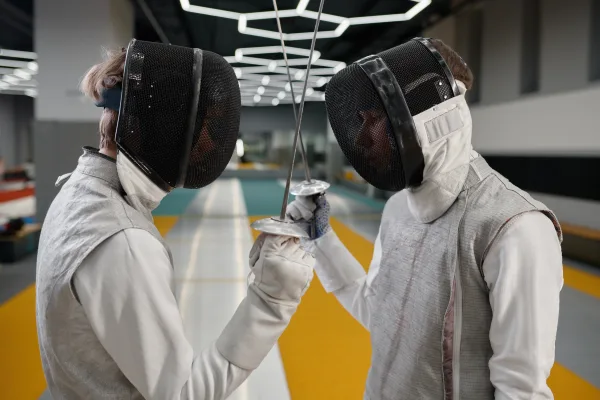
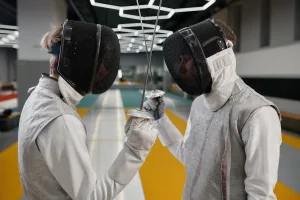
The session opens with your instructor greeting you, and the first task is getting dressed. The plastron, a protective under-layer, then the fencing jacket, a glove for the weapon hand, and finally the mask. All of it is provided by the venue; there is nothing you need to bring. Then comes the weapon. Fencing has three, and the differences between them live in the rules. In foil only the torso is a valid target, and the right of way convention decides who takes the point when both fencers land, which is why foil is the most argued-about weapon of the three. In épée there is no right of way, the target is the whole body, and if both fencers land simultaneously both score. In sabre everything above the waist counts and cuts score as well as thrusts, so the game moves very fast. Introductory sessions usually favour foil or épée, because the actions are easier to separate.
From the Stance to the Bout
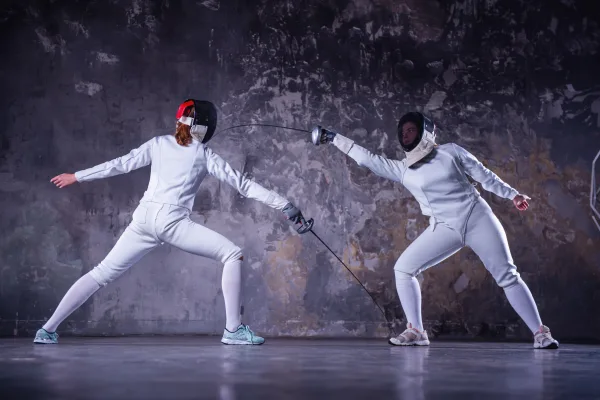
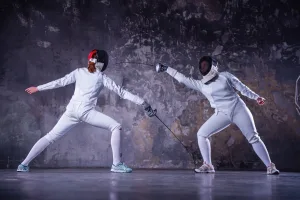
The technical part starts with en garde: body turned side-on, knees slightly bent, weight spread across both feet. Getting used to it takes a few minutes. Then footwork: the avance forward, the retraite back. In both, the feet never cross and the distance is never surrendered, because in fencing losing distance means losing the point. Next is the lunge. The back leg drives, the body extends forward, and the blade reaches the target; it feels clumsy on the first attempts and settles after a few repetitions. The logic of the touch is explained at this stage: where a hit is valid, and how the point is given. The session closes with a short assault, a free bout guided by your instructor, who calls the points and corrects the errors as they happen.
What to Expect and How to Prepare
No preparation is needed to take part. Flexibility and conditioning are not requirements; an adult with a desk job who has been away from sport for years can complete this session from start to finish, because the instructor sets the pace. Comfortable sportswear and clean indoor trainers are enough. Fencing looks severe from the outside but is a safe sport: the blades are blunt-tipped, the protective equipment is standardised, and the rules draw a clear line around how contact may occur. What most participants remember at the end is not physical tiredness but how much thinking the session demanded. Fencing works the legs and the head at the same time; it is a strategy sport in the mould of chess, where reading your opponent, measuring distance and choosing the right moment serve you better than speed.
📷 Fotoğraf Galerisi
3 Fotoğraf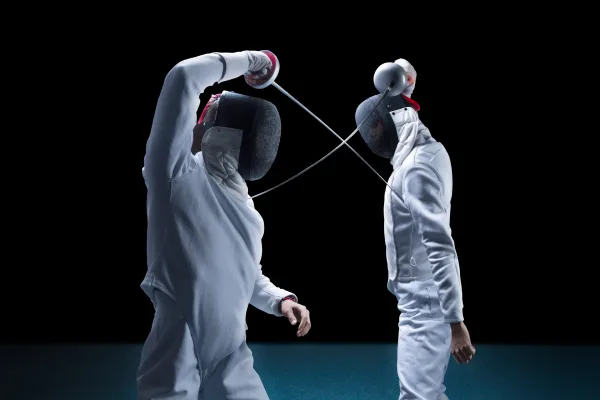
What's included & not included
Included
- Maske, eskrim ceketi ve eldiven tahsisi
- Flöre / epe silah kullanımı
- Sertifikalı eğitmen eşliğinde 90 dakikalık seans
- Temel duruş, adımlama ve hamle çalışması
- Eğitmen asistanlığında kısa maç (assaut)
- Soyunma odası ve duş imkânı
Cancellation and Refund Terms
Under Article 15(g) of Law No. 6502 on Consumer Protection and the Distance Contracts Regulation, there is no statutory right of withdrawal or cancellation for sports, entertainment, leisure and activity services that must be provided on a specific date or period.
Reviews
No reviews yet for this listing. Be the first to leave one!