Alaçatı Beginner Motosurf Course
This is not a one-off thrill ride. It is a structured beginner programme built around six hours of instruction, deliberately split across two or three separate...
What is this training?
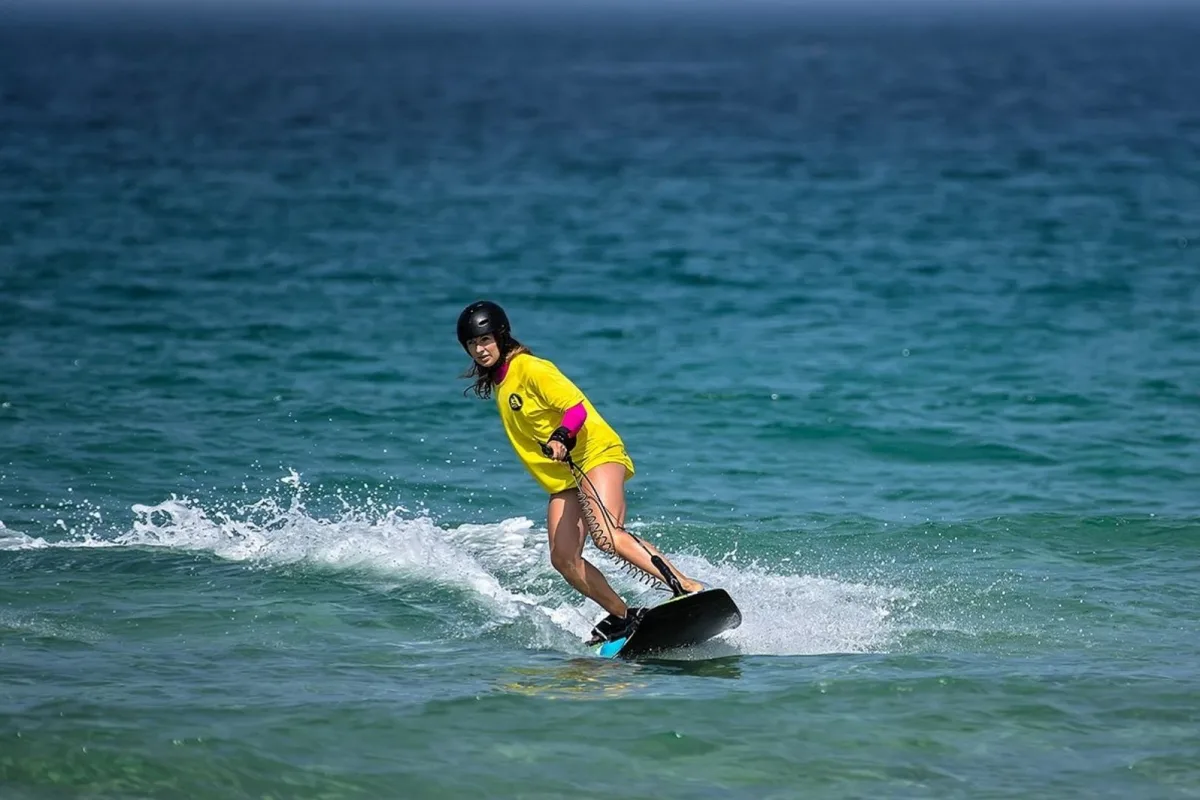
This is not a one-off thrill ride. It is a structured beginner programme built around six hours of instruction, deliberately split across two or three separate sessions. Learning a motorised surfboard is a matter of muscle memory, and an extra hour spent in a tired body teaches less than twenty minutes in a rested one. Every session runs with a certified instructor and is scheduled inside Alaçatı's early-morning flat-water window. A certificate of completion is issued at the end. The objective is unambiguous: by the time you finish, you should be able to start the board safely without supervision, ride it standing, and carve a controlled turn.
Why Alaçatı, and Why the Morning?
Alaçatı is Türkiye's wind sports capital, which sounds like a contradiction here. The thermal wind that kiteboarders and windsurfers spend all day waiting for is precisely what a Motosurf student does not want, because chop makes an already steep learning curve steeper. But Alaçatı's real advantage is that its wind runs like clockwork. The thermal fills in during the afternoon; in the morning the bay is almost motionless. The shallow, sandy bottom makes falls harmless, and being able to stand up in waist-deep water gives beginners a psychological foothold from the very first attempt. On days when the wind arrives early, training shifts to the sheltered water around Ilıca, Boyalık, or Port Alaçatı, so the schedule survives. The season runs May through October.
How the Curriculum Progresses
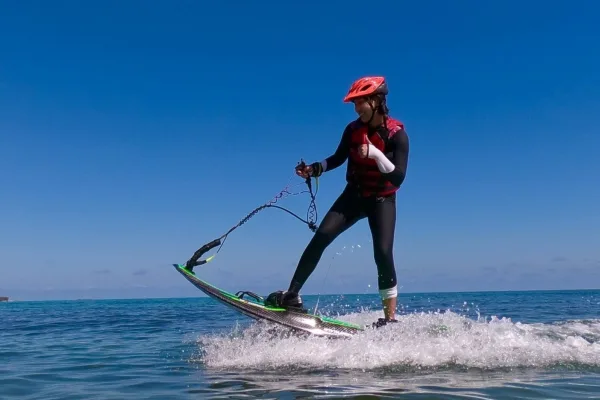
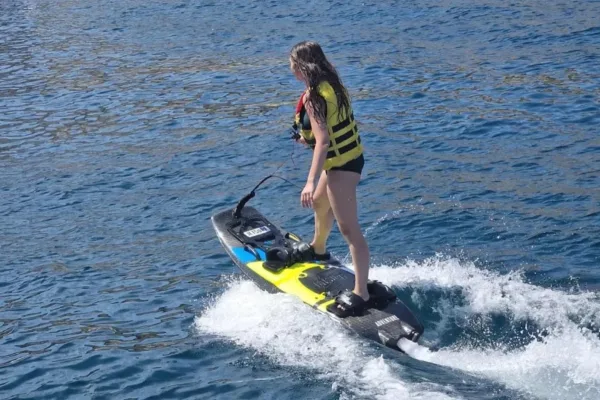
The first session opens on dry land. You get to know the machine: a carbon fibre hull, a weight of thirteen to fifteen kilograms, a propeller-free jet pump drive, and a choice of petrol or electric power. On the sand you learn the graduated use of the wireless throttle strapped to your right hand, why the safety leash is never a negotiable detail, how to shut the engine down, and how to approach a board that has flipped in the water. Only then do you enter the water on your knees to practise throttle control in a straight line.
The second stage moves balance into the body. You learn to initiate turns from your hips rather than your arms, to lean the board over and finish the arc, and to hold the throttle steady through the whole curve. The transition from kneeling to one knee and then to standing is drilled gradually. This is the part of the programme that demands the most repetition, and it is the real reason the sessions are spread across separate days. The third stage raises the speed: planing, where the board rises onto the surface and begins to skim, low-speed balance recovery, and restart technique. The whole sequence follows the fundamental riding principles that come out of international Motosurf racing culture.
What You Walk Away With
A wetsuit matched to the water temperature, an impact vest or buoyancy aid, and a safety leash are all provided throughout the course. On the final session you complete an assessment ride in which your start, straight-line riding, controlled turning, and safe stopping are observed, and your certificate of completion is issued. It is not a racing licence, but it is a record of your baseline competence for the day you want to rent a board independently or move on to an advanced programme. Bring swimwear, a towel, sunscreen, and a calendar flexible enough to accommodate two separate mornings.
📷 Fotoğraf Galerisi
3 Fotoğraf
Equipment
Cancellation and Refund Terms
Under Article 15(g) of Law No. 6502 on Consumer Protection and the Distance Contracts Regulation, there is no statutory right of withdrawal or cancellation for sports, entertainment, leisure and activity services that must be provided on a specific date or period.
Reviews
No reviews yet for this listing. Be the first to leave one!